
Meghalaya Travel Guide
Meghalaya is one of India’s most rewarding destinations for travelers who enjoy waterfalls, misty hills, caves, living root bridges, rivers and quiet village experiences. From the busy streets of Shillong to the forests of Sohra, the crystal-clear Umngot River at Dawki and the living root bridges around Mawlynnong, every region offers a different experience.
This Meghalaya Travel Guide covers the practical information you need to plan your trip, including the best places to visit, the best time to travel, how to reach Meghalaya, a suggested itinerary, approximate Meghalaya trip cost, accommodation, food and important travel tips.
Table of Contents
Meghalaya Travel Guide at a Glance
| Travel detail | Information |
| State | Meghalaya, Northeast India |
| Main gateway | Guwahati, Assam |
| Capital | Shillong |
| Popular destinations | Shillong, Sohra, Dawki, Shnongpdeng, Mawlynnong |
| Recommended trip length | 6 to 8 days |
| Best overall period | October to April |
| Monsoon period | May to September |
| Main attractions | Waterfalls, caves, root bridges, rivers, viewpoints and villages |
| Main transport | Private cab, shared taxi and local transport |
| Currency | Indian Rupee |
| Indian tourist permit | Meghalaya Tourism says Indian nationals usually do not need permits |
| Foreign travelers | Registration and additional requirements can apply in certain areas |
Meghalaya Tourism currently recommends October to April for pleasant weather and sightseeing. It also notes that monsoon months offer dramatic waterfalls and lush scenery but require extra caution because of heavy rain and possible landslides.
Why Visit Meghalaya?
Meghalaya combines nature, culture and adventure in a relatively compact travel circuit.
You can spend one day exploring Shillong, the next visiting waterfalls around Sohra, and another traveling toward Dawki and the India-Bangladesh border.
Some experiences are especially associated with Meghalaya:
- Living root bridges created from Ficus elastica roots
- Nohkalikai Falls near Sohra
- Seven Sisters Falls
- Mawsmai Cave
- Mawkdok Dympep Valley
- Umngot River at Dawki and Shnongpdeng
- Mawlynnong village
- Khasi food and village culture
- Caves, trekking trails and viewpoints
The state’s official tourism portal lists Khasi Hills, Jaintia Hills and Garo Hills as its three major tourism regions, with attractions ranging from waterfalls and caves to national parks and living root bridges.
Best Places to Visit in Meghalaya
1. Shillong
Shillong is the natural starting point for many Meghalaya trips.
The city gives you access to attractions such as Ward’s Lake, Shillong Peak, Elephant Falls and nearby viewpoints. It also works well as a base for exploring other parts of the state.
Ward’s Lake is located in central Shillong and features gardens, a wooden bridge and boating facilities.
Shillong Peak rises to about 1,965 metres and provides views across Shillong and the surrounding landscape. Visitors should carry valid photo identification because of the security arrangements around the viewpoint.
Allow at least 1 to 2 days for Shillong.
2. Sohra, Cherrapunji
Sohra, widely known as Cherrapunji, is one of the essential stops on a Meghalaya itinerary.
The area is known for waterfalls, caves, valleys and living root bridges.
Popular attractions include:
- Nohkalikai Falls
- Seven Sisters Falls
- Mawsmai Cave
- Arwah Cave
- Dainthlen Falls
- Mawkdok Dympep Valley
- Sohra Eco Park
- Nongriat
Sohra is around 53 to 54 km from Shillong by road, according to Meghalaya Tourism.
Nohkalikai Falls is about 7.5 km from Sohra. Meghalaya Tourism lists its current visiting hours as 8 AM to 5 PM.
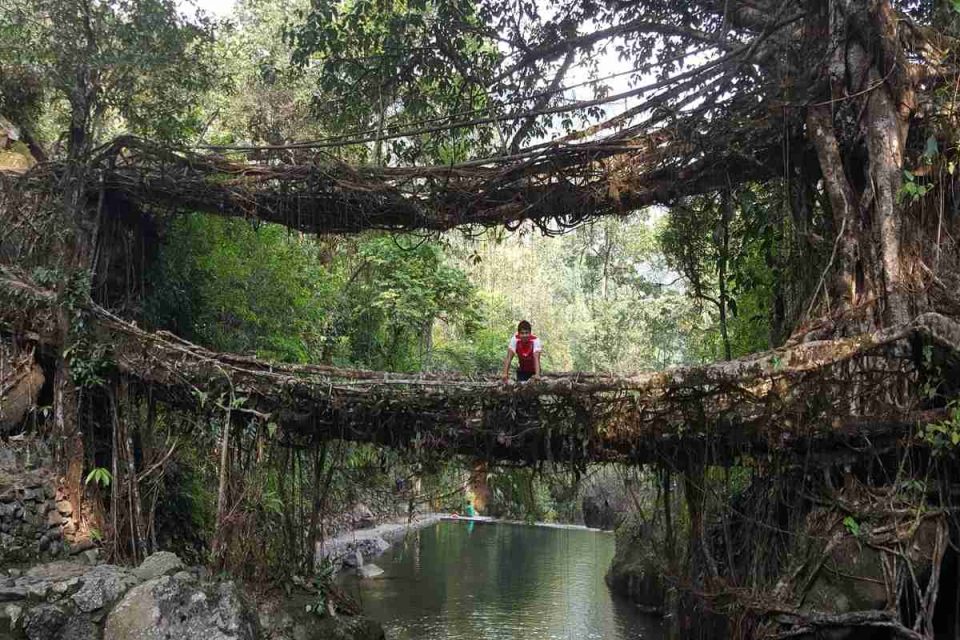
3. Nongriat and the Double-Decker Living Root Bridge
This is one of the most physically demanding experiences on a standard Meghalaya itinerary.
The journey starts around Tyrna village and involves a long descent through approximately 3,000 to 3,500 steps before reaching the Nongriat area.
The reward is the famous Double-Decker Living Root Bridge, followed by the possibility of continuing toward Rainbow Falls.
Meghalaya Tourism recommends visiting during the drier October to March period for safer trekking conditions.
Do not add Nongriat to a packed sightseeing day. Give the trek most of a day and carry proper footwear, drinking water and rain protection.
4. Dawki and the Umngot River
Dawki sits near the India-Bangladesh border and is one of Meghalaya’s most recognizable river destinations.
The Umngot River is known for its exceptionally clear water during suitable conditions. Activities in the area include boating, kayaking, snorkeling and other water-based experiences.
Shnongpdeng, close to Dawki, is useful if you want a quieter riverside stay or adventure activities.
For the best experience, consider spending one night around Shnongpdeng instead of treating the area only as a day trip from Shillong.
5. Mawlynnong
Mawlynnong is famous for its village cleanliness, gardens, traditional Khasi architecture and living root bridge.
The Nohwet Living Root Bridge is one of the main attractions. You can also visit the Sky Viewpoint for views toward the Bangladesh plains.
Mawlynnong is about 76 km from Shillong according to the current Meghalaya Tourism destination information.
6. Mawkdok Dympep Valley
This viewpoint sits along the Shillong-Sohra route.
It offers views of the deep green valley and is also associated with zip-lining. Meghalaya Tourism lists the attraction as approximately 24 km from Shillong and recommends October to April for clearer views.
It works well as a stop while traveling between Shillong and Sohra.
7. Jaintia Hills and Krangshuri Falls
If you have additional time, extend your trip toward the Jaintia Hills.
Popular attractions include:
- Krangshuri Falls
- Phe Phe Falls
- Nartiang Monoliths
- Jowai
- Dawki
- Shnongpdeng
Meghalaya Tourism describes Jaintia Hills as a region combining waterfalls, rivers, caves, history and cultural attractions.
How to Reach Meghalaya
By Air
For most travelers, Guwahati Airport in Assam is the main gateway.
Meghalaya Tourism currently lists Guwahati Airport as about 100 km and roughly three hours from Shillong, depending on road conditions and traffic.
Shillong Airport at Umroi is much closer to the city, around 35 km, but has limited flight connectivity.
For most travelers, check flights to Guwahati first and then arrange a road transfer to Meghalaya.
By Train
Guwahati Railway Station is the nearest major railhead and has connections with several parts of India.
From Guwahati, you can continue to Shillong by shared taxi, private cab or bus.
If you are traveling from cities such as Hyderabad, Bengaluru, Chennai, Mumbai or Delhi, compare both train and flight options based on your available time.
By Road
Guwahati and Shillong are connected by road, with taxis and buses serving the route.
Once inside Meghalaya, a private vehicle becomes useful because many waterfalls, villages and viewpoints are spread across different roads and districts.
Best Time to Visit Meghalaya
October to November
This is one of the most attractive periods for a Meghalaya trip.
The monsoon starts withdrawing, while waterfalls can still retain strong flows. The weather also becomes more suitable for outdoor activities.
Meghalaya Tourism identifies October and November as the post-monsoon period and notes that traditional festivals also take place around the harvest season.
December to February
Winter is generally drier and better suited to hiking, caves, sightseeing and outdoor activities.
Accommodation demand can be high during peak travel periods, so advance booking is sensible.
March to April
Spring brings milder weather in the highlands, although showers are still possible.
Carry a light jacket and rain protection.
May to September
This is the monsoon period.
Waterfalls become dramatic, forests turn intensely green and the landscape looks different from the dry season.
However, heavy rainfall can affect roads and trekking conditions. Meghalaya Tourism advises travelers to check weather forecasts and pay attention to heavy-rain and landslide warnings.
If your priority is trekking, caves and long road journeys, the drier months are easier to manage.
How Many Days Do You Need for Meghalaya?
A practical Meghalaya itinerary needs at least 5 days, but 6 to 8 days gives you more breathing room.
5 Days
Suitable for:
- Shillong
- Sohra
- Dawki
- Mawlynnong
You will need to keep the schedule fairly tight.
6 Days
A better balance for first-time visitors.
You can include:
- Shillong
- Sohra
- Nongriat or another root bridge
- Dawki
- Shnongpdeng
- Mawlynnong
7 to 8 Days
This gives you time to add Jaintia Hills attractions such as Krangshuri Falls or spend additional time around the rivers and villages.
Meghalaya Tourism itself publishes seven-day itineraries covering multiple regions and destinations, showing how much the state offers beyond the standard Shillong-Sohra circuit.
Suggested 7-Day Meghalaya Itinerary
Day 1: Guwahati to Shillong
- Arrive at Guwahati
- Drive to Shillong
- Check in
- Explore Police Bazaar
- Relax after the journey
Stay: Shillong
Day 2: Shillong Sightseeing
Visit:
- Ward’s Lake
- Shillong Peak
- Elephant Falls
- Local markets
- Cafés and cultural attractions
Stay: Shillong
Day 3: Shillong to Sohra
Travel toward Sohra.
Stop at:
- Mawkdok Dympep Valley
- Viewpoints
- Waterfalls
- Mawsmai Cave
Stay: Sohra
Day 4: Sohra and Nongriat
Start early.
Choose either:
- Nongriat Double-Decker Living Root Bridge trek
or
- A lighter Sohra sightseeing day
If you choose Nongriat, avoid adding too many other attractions.
Stay: Sohra
Day 5: Sohra to Dawki and Shnongpdeng
Travel toward Dawki.
Explore:
- Dawki
- Umngot River
- Shnongpdeng
- Riverside activities
Stay: Shnongpdeng or Dawki
Day 6: Mawlynnong and Return Toward Shillong
Visit:
- Mawlynnong
- Nohwet Living Root Bridge
- Sky Viewpoint
- Nearby villages
Return to Shillong.
Stay: Shillong
Day 7: Shillong to Guwahati
Have breakfast and leave for Guwahati.
Keep enough buffer time if you have a flight or train to catch.
Meghalaya Trip Cost
Your Meghalaya trip cost depends heavily on the number of travelers, accommodation, season and vehicle choice.
Current 2026 travel-cost estimates from local operators and travel businesses put a 5-day trip, excluding flights, broadly around ₹20,000 to ₹40,000 per person for many travelers, while other 2026 estimates show lower budgets for travelers using basic accommodation and shared transport.
A useful planning range is:
| Expense | Indicative range |
| Budget accommodation | ₹800–₹2,000 per night |
| Mid-range accommodation | ₹2,000–₹5,000 per night |
| Food | ₹300–₹700 per person/day |
| Private cab | Roughly ₹4,000–₹6,500 per vehicle/day |
| Activities and entry fees | Varies by attraction |
| 5–7 day land trip | Roughly ₹15,000–₹40,000 per person |
These figures are planning ranges, not fixed Meghalaya government tariffs. Hotel rates, cab quotes and activity prices change with season, demand, vehicle type and group size. Current 2026 travel-cost sources also show that sharing a private vehicle significantly changes the per-person cost.
For a family or group, calculate your cab cost per vehicle rather than per person.
For example, a ₹5,000 daily cab split among four travelers costs ₹1,250 per person per day for transportation.
Flights or trains from your home city are additional.
Where to Stay in Meghalaya
Shillong
Best for:
- First-time visitors
- Restaurants and cafés
- Shopping
- Easy access to local sightseeing
Sohra
Best for:
- Waterfalls
- Caves
- Root bridge treks
- Early starts for sightseeing
Shnongpdeng
Best for:
- Riverside stays
- Boating
- Kayaking
- A quieter experience
Mawlynnong
Best for:
- Village experiences
- Living root bridges
- Slower travel
You do not need to stay in Shillong every night. Splitting your accommodation between Shillong, Sohra and Shnongpdeng reduces long daily drives.
Food to Try in Meghalaya
Meghalaya has a distinct Khasi, Jaintia and Garo food culture.
Look for local dishes such as:
- Jadoh
- Doh Khlieh
- Tungrymbai
- Pumaloi
- Nakham Bitchi
- Local red rice preparations
Shillong offers the widest variety of restaurants and cafés.
In smaller villages, food choices become more limited, so carry simple snacks for long road journeys.
Meghalaya Travel Tips
1. Carry rain protection
Even outside the peak monsoon, Meghalaya weather can change quickly.
Carry:
- Waterproof jacket
- Small umbrella
- Waterproof backpack cover
- Quick-drying clothes
- Anti-slip footwear
Meghalaya Tourism specifically recommends rain protection and anti-slip shoes for monsoon travel.
2. Keep cash with you
Card and digital payment availability is stronger in major towns than in remote villages.
Withdraw sufficient cash in Shillong or another major town before heading into remote areas.
3. Do not underestimate trekking
The Nongriat trek involves thousands of steps.
Wear proper shoes and start early.
4. Keep buffer time
Do not schedule a flight immediately after a long road journey without a time buffer.
Rain, traffic, road conditions and sightseeing stops affect travel time.
5. Book ahead during peak months
Accommodation demand increases during the November to February period.
Meghalaya Tourism advises advance booking for accommodation and transport, especially during peak season.
6. Respect local communities
Many attractions are located inside villages and community-managed areas.
Follow local instructions.
Avoid littering.
Do not enter private property without permission.
Use local guides where recommended.
7. Check current advisories
Before traveling, check official Meghalaya Tourism and Meghalaya Government updates.
A Meghalaya Government advisory issued on August 20, 2026 asked tourists and visitors in Shillong to remain vigilant and follow official advisories and instructions because of the prevailing law-and-order situation in the city.
8. Check entry requirements
Meghalaya Tourism currently states that Indian nationals usually do not need permits to visit Meghalaya. It also states that foreign nationals must register on arrival and that additional permits might apply in certain border areas.
Requirements can change, especially for international travelers visiting border locations. Check the latest official guidance before departure.
Is Meghalaya Suitable for Families?
Yes, provided you build a comfortable itinerary.
For families with young children or older travelers, avoid putting several long treks into the same trip.
Good family-friendly choices include:
- Shillong
- Ward’s Lake
- Elephant Falls
- Mawkdok Dympep Valley
- Selected Sohra waterfalls
- Mawlynnong
- Dawki boat rides, subject to local conditions
Nongriat is better suited to travelers comfortable with a demanding stair-heavy trek.
Is Meghalaya Suitable for a Honeymoon?
Meghalaya works well for couples who prefer nature, road trips and quieter stays.
A couple’s itinerary could include:
- 2 nights Shillong
- 2 nights Sohra
- 1 night Shnongpdeng
- 1 night Shillong
Choose a comfortable hotel or scenic homestay and avoid packing every day with sightseeing.
Meghalaya Travel Checklist
Before leaving home, check:
- Flight or train tickets
- Hotel confirmations
- Cab booking
- Weather forecast
- Local attraction conditions
- Cash
- Government ID
- Comfortable walking shoes
- Rain jacket
- Power bank
- Medicines
- Travel insurance
- Copies of important documents
For international travelers, also verify visa, registration and any location-specific permit requirements.
Frequently Asked Questions
How many days are enough for Meghalaya?
Six to eight days works well for a first Meghalaya trip covering Shillong, Sohra, Dawki, Shnongpdeng and Mawlynnong. Five days is possible if you keep the itinerary compact.
What is the best time to visit Meghalaya?
October to April is a practical period for sightseeing, trekking and outdoor activities. May to September brings heavier rain and powerful waterfalls but requires greater attention to weather and road conditions.
Is Meghalaya expensive?
Your biggest variable is transportation. A private cab is priced per vehicle, so sharing it with family or friends reduces the cost per person. Accommodation and food offer options across different budgets.
Is Dawki worth visiting?
Dawki and nearby Shnongpdeng are popular for the Umngot River, boating and other outdoor activities. Water clarity varies with weather and river conditions, so do not expect identical conditions throughout the year.
How do I reach Meghalaya from other parts of India?
Most travelers fly or take a train to Guwahati and continue by road to Shillong. Shillong Airport has limited flight connectivity.
Is Shillong enough for a Meghalaya trip?
No, if you want to experience the state’s major natural attractions. Shillong is a useful base, but Sohra, Dawki, Mawlynnong and the Jaintia Hills offer different experiences.
Do Indians need a permit for Meghalaya?
Meghalaya Tourism currently says Indian nationals usually do not need permits. Always check the latest official guidance before your trip.
Is the Nongriat trek difficult?
It requires a long descent and ascent involving roughly 3,000 to 3,500 steps. Meghalaya Tourism recommends suitable footwear and guidance for the terrain.
Final Thoughts
A good Meghalaya trip is about balancing sightseeing with travel time.
Start with Shillong, spend time in Sohra, dedicate a separate day to the Nongriat trek if you want the Double-Decker Living Root Bridge, then continue toward Dawki, Shnongpdeng and Mawlynnong.
For most first-time visitors, six to eight days gives enough time to see the major attractions without turning the trip into a continuous road journey.
Before booking, check the latest weather, road conditions, accommodation availability and government advisories. Meghalaya’s weather changes quickly, and some attractions require more time and physical effort than their distance on a map suggests.
